Designing sustainable infrastructure with the future in mind
End-of-life and conversion
At Italferr, designing sustainable infrastructure means adopting a holistic vision that focuses on the entire life cycle of the project, assessing its environmental impact from the early design stages to the possible scenarios resulting from its evolution and transformation, while continuing to generate value for the local area.
Railway infrastructure, for example, is not done once and for all. It can be upgraded, modified or functionally adapted, as in the case of removing level crossings or doubling tracks, and, once it has reached the end of its life, it can be decommissioned and converted for other use by the public.
In line with this long-term approach, Italferr integrates Life Cycle Assessment (LCA) methods into its processes, with the in-depth analysis of the environmental impact associated with each phase of the infrastructure's life cycle, including end-of-life (EoL) and possible conversion scenarios.
The objective is twofold: to assess the impact of demolition, dismantling and debris management activities, and at the same time to identify alternative scenarios for enhancing existing infrastructure, including the conversion of railways into greenways.
End-of-life analysis and circular economy strategies
There are two key aspects regarding Italferr's analysis of abandoned railway infrastructure.
1. Demolition, dismantling and debris management operations
LCA can help determine many environmental KPIs, such as greenhouse gas emissions from dismantling, demolition and debris management activities required when decommissioning abandoned infrastructure.
There is a special focus on the evaluation of virtuous practices, with the analysis of recyclable materials, primarily steel and aggregates, which can be recovered according to End-of-Waste criteria.
Analysing and promoting these approaches encourages practices that can minimise the impact of decommissioning, besides disseminating strategies for restoring economic and environmental value to materials that re-enter the production cycle according to circular economy principles.
2. Projects to convert railway lines into greenways
Rail Trails – abandoned railways transformed into greenways – are one of the most virtuous scenarios for reusing abandoned infrastructure.
Railways, by their very nature:
- have a regular path and gentle slope,
- are continuous and operate on a dedicated right-of-way,
- cross landscapes of natural, historical and cultural beauty.
These are ideal characteristics for transforming them into soft mobility routes (cycle, trekking, horse riding paths), creating ecological connections and promoting regional tourism.
Existing buildings can also be repurposed as information points, accommodation facilities or spaces for eco-tourism services, generating positive social and economic benefits.
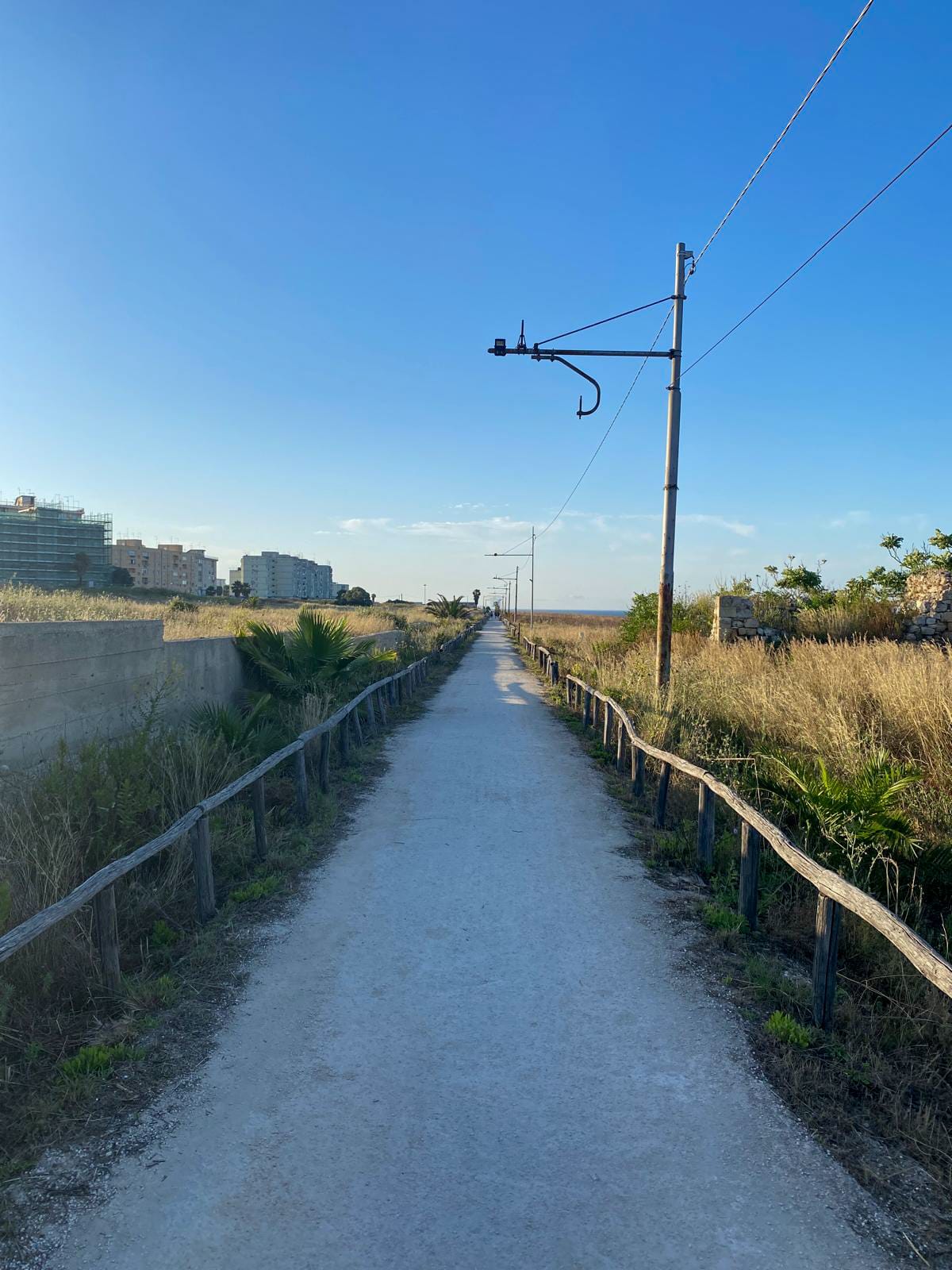
Focus Greenways: from railways to green corridors
Greenways can be defined as "interconnected linear park systems, protected, managed and developed for recreational, ecological and historical-cultural purposes"1.
Italferr also designs projects to convert railway infrastructure into greenways and, based on a life cycle thinking approach, emphasises the following aspects in its work:
- decarbonisation, by promoting active and low-emission mobility;
- social cohesion, because greenways contribute to the regeneration of often marginal areas;
- circular economy, by reusing existing infrastructure and materials.
LCA analyses are also useful for comparing traditional demolition and repurposing scenarios, highlighting how conversion can drastically reduce end-of-life impacts on the environment and generate additional long-term benefits.
A forward-looking approach for infrastructure for generating value through time
By integrating Life Cycle Thinking and end-of-life assessment in its projects, Italferr promotes a responsible design model, in which the infrastructure is designed to meet current needs, while also generating environmental, social and cultural value beyond its original function.
Converting railways to greenways is one of the most emblematic examples of this vision, as a sustainable form of transformation that can safely convert historically layered sites and restore them to public use, while contributing to European objectives of climate resilience, sustainable mobility and protection of natural heritage.